



Dairy bull rankings move
This week’s release of Australian Breeding Values has seen significant movements in dairy bull rankings, as a result of enhancements to DataGene’s genetic evaluation system.
Peter Thurn, DataGene Stakeholder Relations Specialist, said the enhancements bring the system closer in line with the evolving needs of dairy businesses, new knowledge and breeding technologies.
“We listened and acted on the farmer preferences and industry feedback we received during 5-yearly review of the National Breeding Objective. The enhancements enable dairy farmers to breed the herds that meet the future needs of the industry,” he said.
Peter said that while individual bull rankings had changed, high genetic merit animals continued to rank well with some reshuffling on the ladders for Balanced Performance Index (BPI), Health Weighted Index (HWI) and Sustainability Index (SI).
“About half of the top 25 Holstein bulls for BPI in August are still in the top 25, but they now have some different neighbours.”
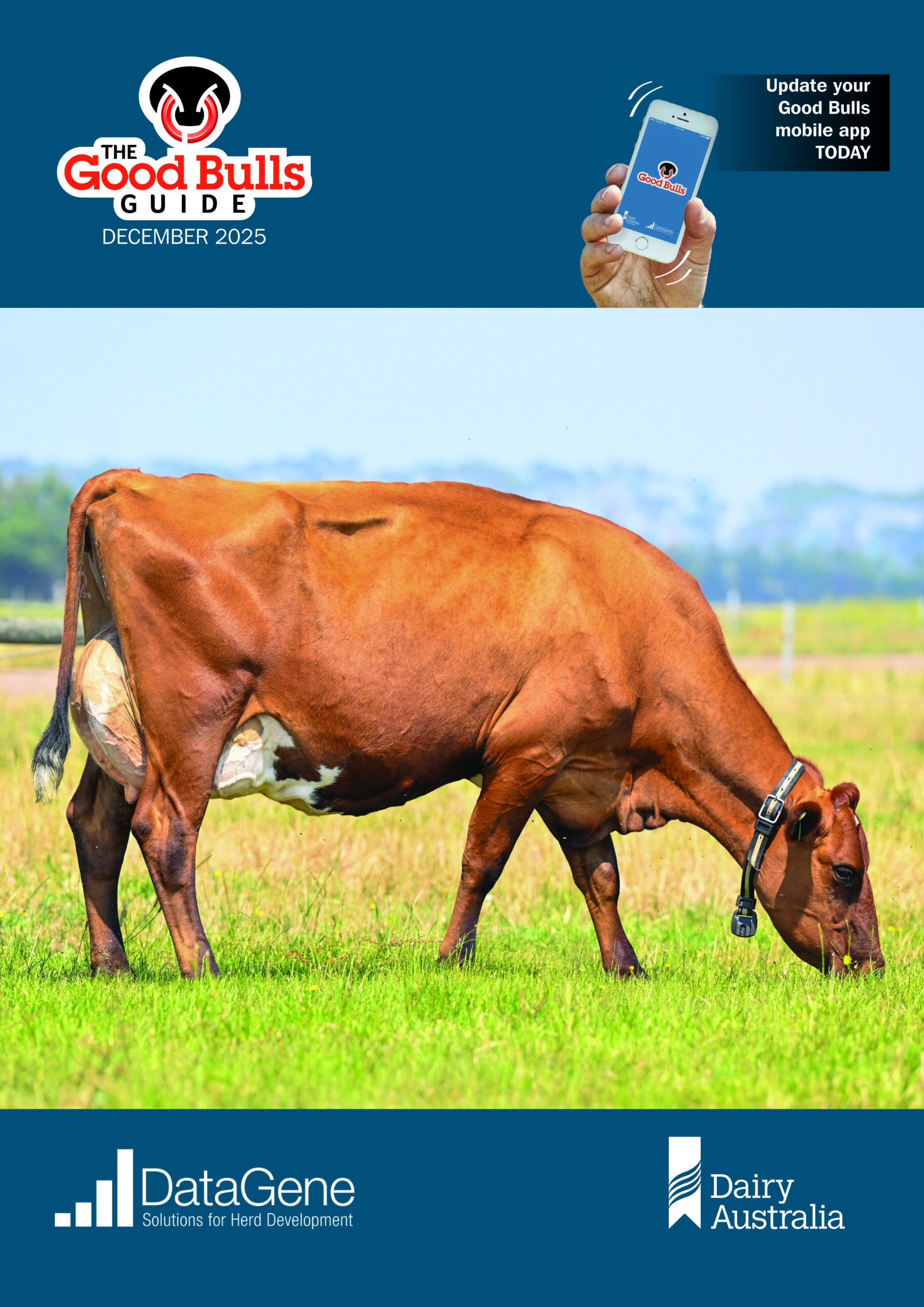
DataGene’s latest Good Bulls Guide has significant changes in bull ABVs and rankings as a result of enhancements to the genetic evaluation system.
Peter said the three main enhancements to the system involved:
- Updating milk prices to better reflect current and future payment systems.
- Updating the ‘base’ so that breeding values are compared to a more relevant population of animals.
- Including calving ease and gestation length in the Health Weighted Index to better suit seasonal calving herds.
He outlined the main impacts that people may notice in this week’s ABV release.
Firstly, breeding values for most traits have dropped as a result of updating the base.
“While updating the base changes the absolute values of ABVs, animal rankings are not affected,” Peter said.
Secondly, the magnitude of indices (BPI, HWI and SI) has increased, with bigger numbers for BPI in particular.
“This is mainly due to the increase in weightings for milk price, the balance of protein to fat as well as updated feed, input and labour costs,” he said.
“Generally, when you update the base, the lower ABV values flow through into the indices. But in this case, the updated milk prices and input costs have offset this.”
Thirdly, Holstein and Jersey breeders may notice a big increase in the values for Overall Type ABV and Mammary ABV.
“This is because the base group for the type evaluation has been expanded so that we are now comparing bulls and cows to a more representative group,” he said.
Fertility ABVs for Holsteins and Milk Litres for Jerseys have both dropped due to the updated base.
“This is actually good news because the drop reflects exceptional genetic improvement for these traits over the past 10 years. The fact that the ‘base’ or ‘average population’ has improved dramatically translates to lower breeding values.”
DataGene also introduced two additional changes with the December ABV release: enhanced expression of type traits with intermediate optimums and a new model for the Survival ABV.
Type traits with intermediate optimums now carry a letter beside their ABV value with ‘O’ indicating optimum.
“There’s no change to the way these ABVs are calculated. We have just enhanced the way they are reported to make it easier to identify animals that are close to the optimum.”
The new model for Survival ABV combines early and late survival data, giving a better prediction of productive life. Some re-ranking of animals for Survival ABV has occurred with the implementation of the new model.
“While there have been significant movements in bull rankings this release, we are confident the adjusted models will enable farmers to breed herds that better meet their future needs,” Peter said.
For more information contact: DataGene 1800 841 848 or enquiries@datagene.com.au or www.datagene.com.au