
WA farmers ignore the trends and stick to their goals
Mark and Dorothy Haggerty have seen breeding trends come and go over a dairying career closing in on 50 years but they continue to enjoy the success that comes from sticking to a consistent, well-researched breeding strategy.
They have always bred a commercial herd that suits their family farm at Capel in south-west Western Australia.
Their West & Haggerty herd is in the top 5% in Australia for the Balanced Performance Index (BPI) and their production figures continue to improve and impress.
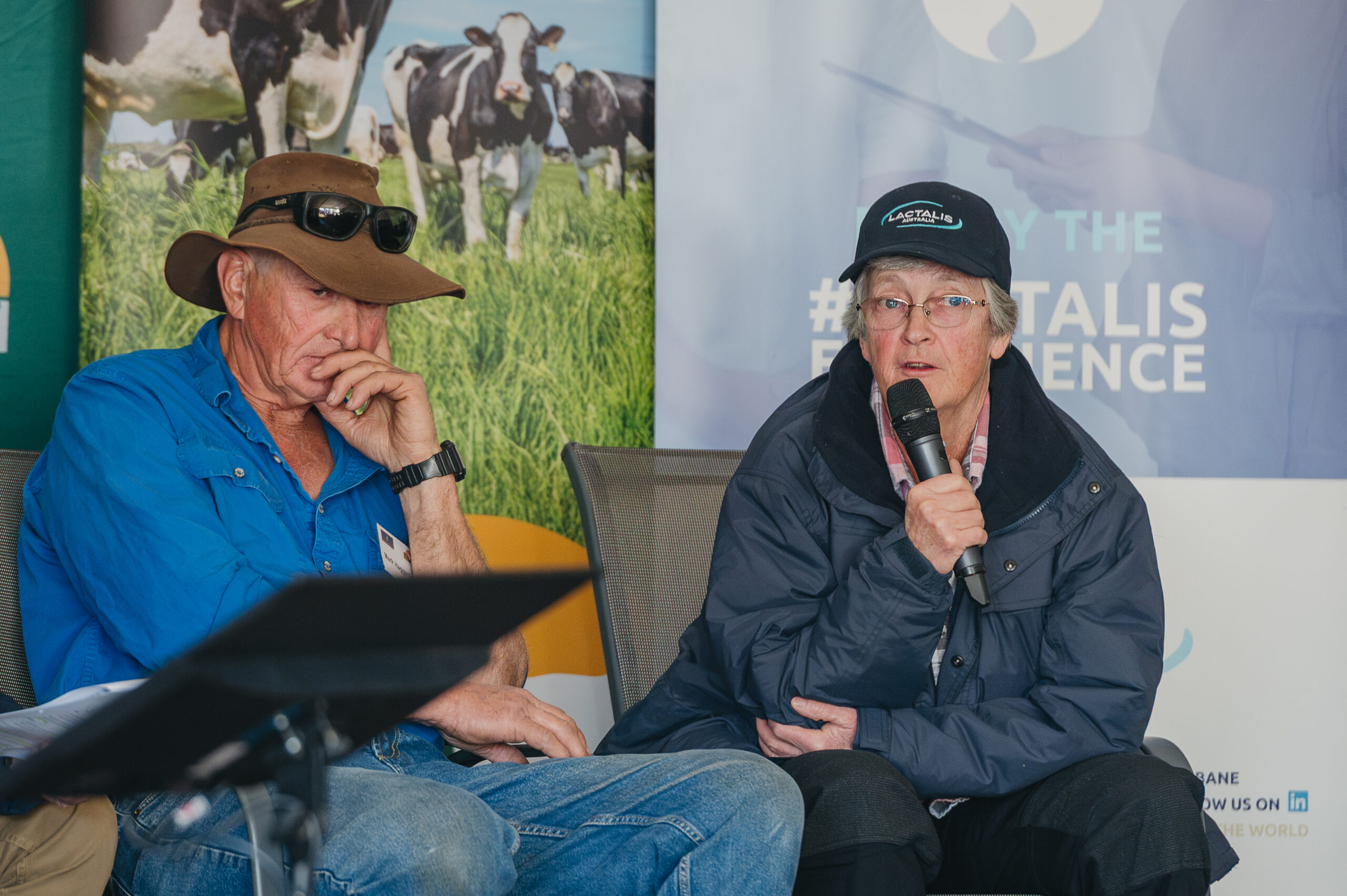
Mark and Dorothy Haggerty have fast-tracked genetic gain in their herd by genomically testing female calves.
Regularly turning to DataGene’s Good Bulls Guide, using genomic testing and herd recording data, Mark and Dorothy have made real genetic progress.
“I guess we’re picky, but once you’ve got your breeding goal in mind, you’ve got to stick to it,” Dorothy says. “You can’t keep chopping and changing.”
The partnership started at Capel in 1980 milking about 80 cows. Today, Dorothy and Mark, their daughter Lisa and her husband Jason and seven staff milk 900-1,000 Holsteins in a herd topping 2,000 including dry stock.
The family enterprise expanded 19 years ago with a 12,000 ha wheat and sheep property in the north-eastern wheatbelt aimed at securing grain and fodder. Son John and his family run sheep, providing more diversification.
They thrive on using data and technology, not only for breeding but for production, with DeLaval milking robots introduced earlier this year.
The farm has had to adapt to climatic changes. “Our grazing is getting shorter,” Mark admits. “If we get four to five months, we consider ourselves to be lucky. We have 62 ha of irrigation but the rest of it we can’t start grazing till late June or early July – it used to be early-mid May till October into November.”
Breeding
The herd is mostly Holstein, with a small number of three-way crossbreds that are on their way out. The addition of Swedish Red and Montbéliard improved fertility, reduced cow size and improved feet and legs. The cross breeding was successful but has achieved its goal and the mixes are being filtered out of the herd.
“They were there to move some lines of cows away from tall, lean, American-bred Holsteins but we’ve got a lot more options now with the Holsteins to improve fertility, get away from inter-breeding and keep some components. We’ve got a good base to go forward with.”
The family uses different genetic companies to get “whatever suits our goals”.
“We’re trying for a medium-sized cow, with good bone, good capacity, feet and legs, increasing production and components, and temperament is very high on our
priorities. If you can’t milk them because they’re cranky, it doesn’t matter how good of a producer they are.”
The herd calves in four even blocks across the year to maintain a flat fresh milk supply.
“We’ve set our goals to suit our farm and business model, so we breed for a good commercial working cow that’s going to have longevity and give us what we need in our system,” Dorothy says.
“We’ve always thought we can’t just breed for litres and not look at our percentages of fat and protein. It’s just illogical. When you look through the available bulls, they’ve come back a lot on height, and they’ve got capacity and
a lot more bulls with good percentages of components as well as litres of milk. They have good components in them if your breed for it. Feeding that goes with it, but you’ve still got to have the breeding to work on.”
Good Bulls App
Using the Good Bulls App is one of the keys to their success.
“When we’re looking, we put in our parameters and see what comes up and most of them tend to be in the Good Bulls App,” Dorothy said. “It’s very helpful. We use the filtering tool where you can put in everything you want and see what comes out. That narrows your search parameters and is a big saving time wise. Also, having a team that’s keen on breeding and selection is good fun and we have some great mornings with a coffee and filtering through our selections.”
Bulls used in the past two years are among the top BPI bulls available and above average for fat and protein, temperament, feet and legs, matching with the breeding objectives. The herd’s genetic progress report shows that 89% of cows born in 2023 were bred from Good Bulls, a simple strategy to improve the genetic merit of a herd over time, which is reflected in the graph.
Genomic testing
Every female is genomically tested at birth. “That gives us such a suite of tools for selection to cull the bottom, choose the beef-on-dairy mothers and select the best cows and heifers for sexed semen,” Dorothy says. “The results have been visible and quite rapid.”
The business is diligent with data and monthly herd recording and will ramp that up even further with the robotic milking system.
At the Western Dairy Innovation Day, DataGene CEO Dr Emily Piper said the West & Haggerty success wasn’t by chance.
“It didn’t happen because they got lucky with one bull; it happened because they consistently applied a breeding strategy over many years. Small genetic improvements compound over time,” Dr Piper said.
“Three things stand out: use of the Good Bulls Guide, genomic testing and female selection, and keeping good herd recording and reproductive data.
“None of these on their own are revolutionary; the power comes from doing all three consistently. Every calf born carries the genetic decisions you made years earlier. And consistently investing in and applying a genetic strategy that supports your breeding objective is key to making progress and reaping the benefits of your investment.”
Dorothy and Mark have been great supporters of the Australian genetic evaluation system, contributing information to the system through herd test and using DataGene tools and information to build this great herd over decades.
For Dorothy, it’s all about planning and consistency. “You’ve got to have a Plan A, though when you’re in farming you probably need half the alphabet behind that because things change very rapidly,” she jokes.
“You’ve got to plan for where you want to head and have goals and we’re happy we stuck to our objectives. You’ve got have a cow to suit what your farm is and where you are. The best trick is to make use of what your farm does best.”
Now 66, Dorothy and Mark have no plans to retire. “We’re not social people and we just love what we’re doing,” she says. “That was one of the reasons for going to the robots. We’ve got our family working together and good staff with us; we’re in a good position and the robots will reduce the workload and increase our knowledge, so let’s celebrate our gorgeous cows and carry on.”
Download the Good Bulls App from GooglePlay or the App store.