



Australia’s dairy cows staying longer in the herd
Australia’s dairy cows are staying in the herd for more than four lactations and genetics research is enabling longer productive lives.
An analysis of nearly two million cows in DataGene’s latest Herd Improvement Report shows that the average herd life was 4.11 lactations in Holsteins and 4.16 lactations in Jerseys, based on research conducted by Agriculture Victoria scientist Dr Majid Khansefid.
The reports shows that more than 20% of recorded cows in the national herd are in lactation five or greater.
Michelle Axford, special projects for DataGene, said milk production and cow longevity are key drivers of business profitability. “A longer productive life of dairy cows is good for profitability, animal welfare, reducing emissions and cutting replacement rates,” she said.
“It takes a lot of effort to get replacement heifers into the herd and that effort means money. Cows lasting longer is good because more mature cows produce more milk than younger cows. In addition, cows with a longer productive herd life means that a few less heifers are required and that reduces the cost of replacing those animals and rearing new heifers. We have less waste in the system.”
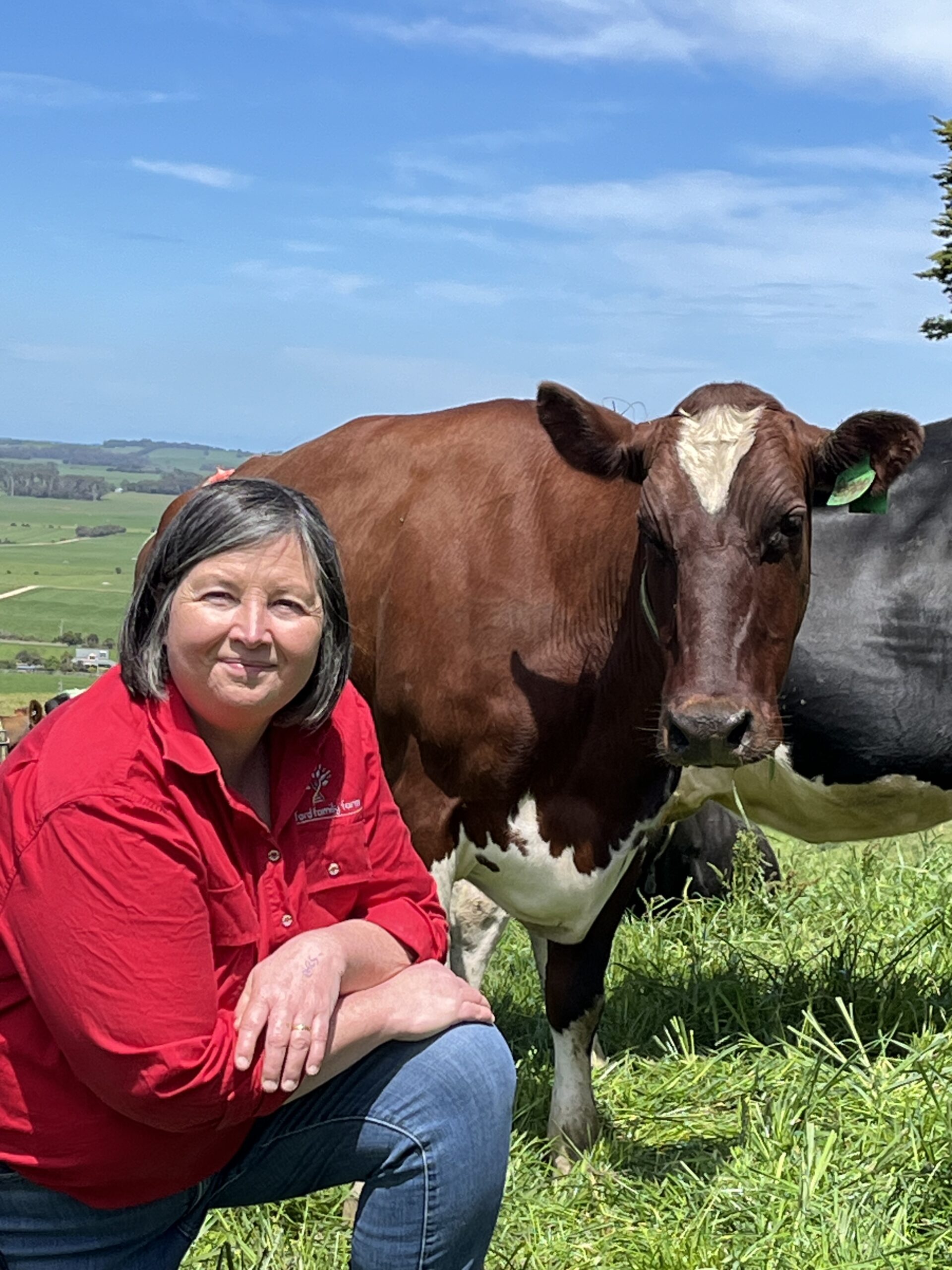
DataGene’s Michelle Axford says a longer productive life of dairy cows is good for profitability, animal welfare, reducing emissions and cutting replacement rates.
Dr Axford said farmers would be pleasantly surprised to see cows surviving more than four lactations.
“Most farmers would think it’s lower than that but these figures show that Australian cows are doing a good job of lasting and we want to keep improving that. Farmers understand that it’s not just about getting each cow to produce more milk, they want to improve her production over a longer period of time,” she said.
Multiple research and development activities at DataGene, DairyBio, and DairyUP are working on strategies to improve longevity. DataGene has recently released an updated Australian Breeding Value based on DairyBio research.
“The updated Survival Australian Breeding Value helps farmers use genomics to select young bulls and heifers that are more likely to perform well by lasting through their first few lactations and beyond. The updated ABV identifies animals that are less likely to leave the herd due to poor fertility or mastitis in their younger years, giving farmers more culling options in later life.”
With cows remaining productive in the herd for longer, farmers can choose to reduce their replacement rate. Australia’s herd replacement rate has been about 25 per cent for several years but Dr Axford believes breeding and managing cows to last longer could reduce that figure. “From profit and emissions points of view, it’s worth looking at opportunities to reduce that figure.”
The report uses herd recording information from more than 1300 farmers. “We should recognise the efforts of the 1300 farmers providing this information which helps in their own management purposes and helps us to tell a bigger story,” Mrs Axford said.
She added that there had been a decline in the percentage of cows enrolled in routine herd testing but the DataConnect project was working to enable seamless data exchange with on-farm software, extending DataGene’s products and services to a greater number of herds.
For more information contact: DataGene 1800 841 848 or enquiries@datagene.com.au or www.datagene.com.au.
DataGene is an initiative of Dairy Australia and the herd improvement industry.